One Year After the 2025 LA Wildfires: The Fire Defense Lessons Homeowners Can’t Ignore.
In January 2025, Southern California was forced to confront a reality few expected so early in the year: wildfire season no longer follows a calendar. What began as a typical winter month quickly turned into one of the most destructive fire events Los Angeles County had seen in decades.
One year later, the scars remain, both on the landscape and in the collective memory of homeowners who watched flames race toward neighborhoods with little warning and limited resources.
As we mark the one-year anniversary of the Eaton and Palisades fires, the question many families are asking is no longer if it could happen again, but how prepared are we if it does?

Photos by: Malachi B. & Matt P.
January 2025: A Wake-Up Call for Southern California:
The January 2025 wildfires shocked residents because they defied expectations. Wildfires in Los Angeles are often associated with late summer and fall, yet this series of fires erupted in the heart of winter. Multiple blazes ignited across Los Angeles County, including the above two mentioned, ultimately burning more than 40,000 acres combined. The Eaton Fire alone scorched over 14,000 acres, destroying thousands of homes and structures and forcing mass evacuations.
Economic losses reached into the multi-billion-dollar range, disrupting lives, displacing families, and overwhelming emergency response systems. Fire-related products sold out nationwide within hours. Equipment, hoses, pumps, and fire-prevention tools became nearly impossible to find as homeowners scrambled for solutions in real time. FireFighter1 systems were no exception: inventory was depleted almost immediately as awareness spread.
What became clear was that demand surged after the danger arrived, when it was already too late for many.
Why the Fires Spread So Quickly:
Several compounding factors fueled the rapid spread of the January 2025 LA fires. A wetter-than-average season prior had encouraged dense vegetation growth. When that growth dried out under unseasonably warm conditions, it created an extensive fuel load. Add to that record-strength Santa Ana winds, which pushed embers miles ahead of active fire fronts, and the result was catastrophic.
Another critical factor was the vulnerability of the Wildland-Urban Interface (WUI)—areas (learn more about WUI in this blog), where homes are built directly alongside natural vegetation. In these zones, fires move quickly from brush to buildings, often faster than fire crews can safely access them. Limited staffing, stretched resources, and blocked evacuation routes further compounded the problem.
In many cases, homeowners had only minutes to respond, underscoring a harsh truth: waiting for help is not always an option.
Why Early Access to Water Changes Outcomes:
Fire professionals consistently emphasize that the first moments of a fire threat are decisive. Spot fires ignited by embers flying, cooking, landscape igniting, or rooflines smoldering can often be controlled early, if water is available immediately.
During the January 2025 LA fires, many homes had no practical way to access water once municipal pressure dropped and/or firefighting resources were redirected. Pools sat full, unused, while structures burned nearby. This disconnect between available water and usable water has become a focal point in conversations about modern fire preparedness.
Having an on-site water source that can be deployed instantly gives homeowners a critical window: time to wet down vulnerable areas, slow ignition, or prevent embers from turning into structure fires before professional and official crews arrive.
FireFighter1: Built for Reality, Not Just Theory:
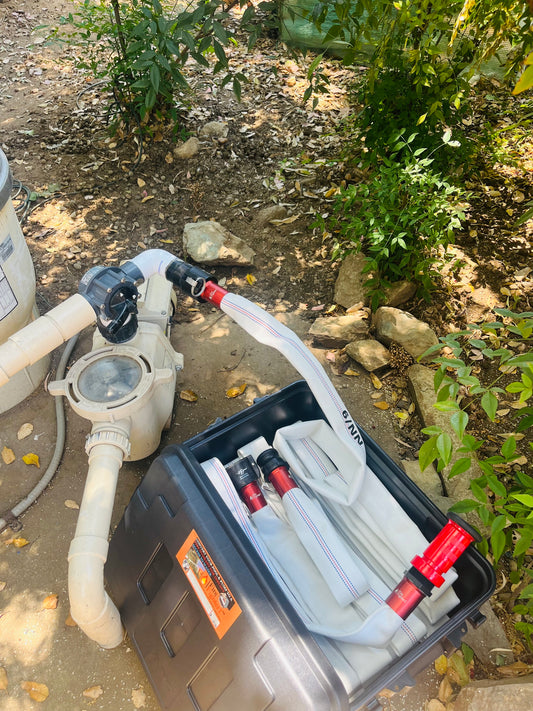
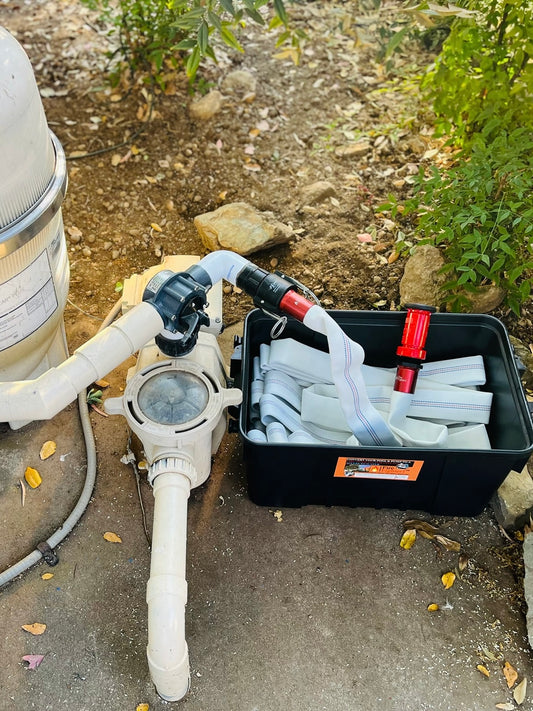
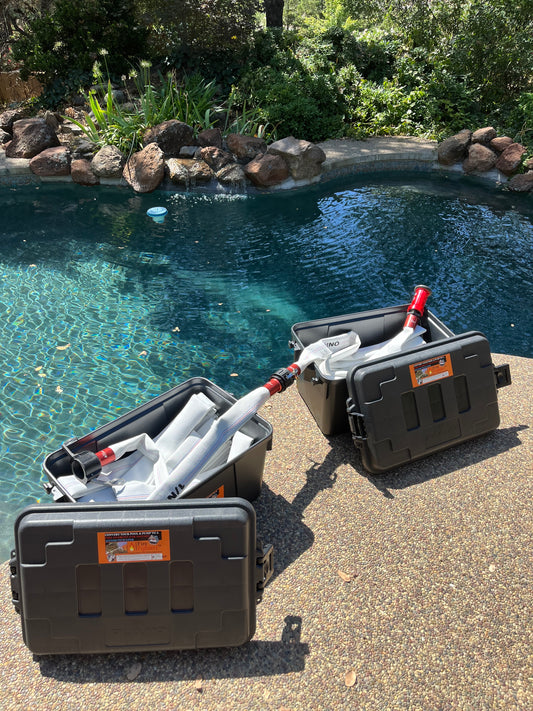
FireFighter1 was created to bridge the above mentioned gap. Developed in collaboration with CalFire and many fire professionals and designed specifically for homeowners, to be top grade, durable, lightweight, and long-lasting, the FF1 system allows pool owners to transform existing pool water into an emergency fire defense resource.
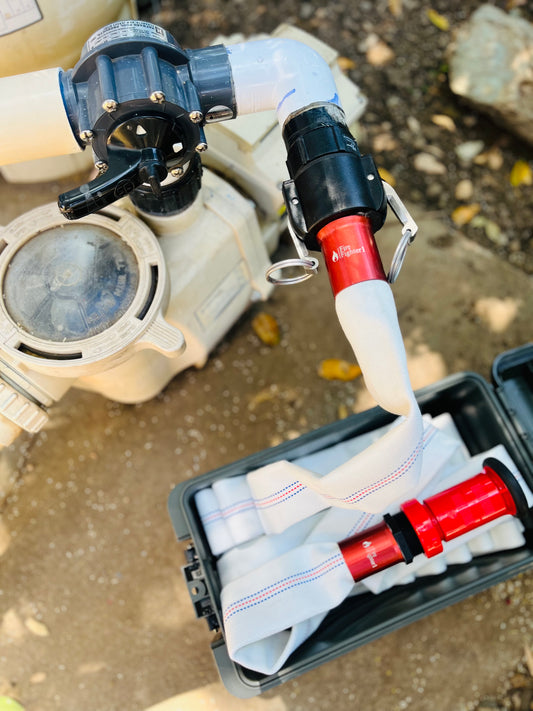
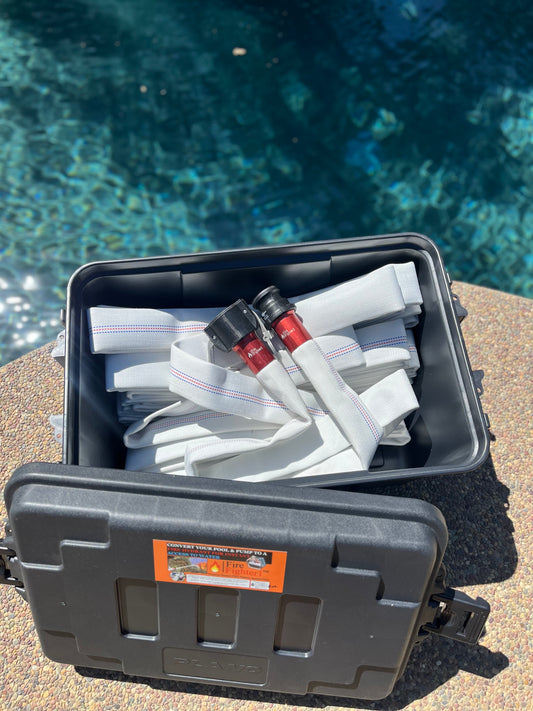
Unlike large, permanently installed suppression systems that often cost $10,000 or more and require professional installation, FireFighter1 is designed to be practical, portable, and accessible. The system connects directly to a pool’s existing pump and sprays valuable water 40+ feet away at a rate of 100+ gallons per minute. It later folds neatly into a custom storage box, and remains clean, protected, and always ready—hoping it’s never needed, but prepared to fight if it is.
Custom polypropylene fittings are engineered for durability without high maintenance demands. The hose is lightweight enough for quick deployment, yet rugged enough to withstand harsh emergency use.
Perhaps most importantly, FireFighter1 is intuitive. In an emergency, family members and neighbors can be quickly shown how to operate the system, allowing communities to support one another while professional crews navigate multiple calls.
Affordable Protection Versus High-Cost Alternatives:
Many homeowners turn to DIY or gas-powered pump systems, especially after seeing fire footage online. However, these setups often come with hidden challenges: bulky storage, complex operation, and a high likelihood of failure if they haven’t been regularly tested. Portable gas-powered systems frequently exceed $5,000 in installation and setup costs and require fuel, maintenance, and operational familiarity. None of which are guaranteed during an emergency.
FireFighter1 offers a different approach. By leveraging infrastructure homeowners already maintain—their pool and pump—the system remains operational and familiar. Pool pumps are routinely serviced; if they weren’t, the water would quickly turn green. That regular use ensures reliability when it matters most.
For homeowners with solar, battery backups, or generators, now increasingly common, FireFighter1 integrates seamlessly into existing resilience strategies.
Weekly Fact-Drop:
Did you know that official California records indicate that the devastating series of LA wildfires in January 2025 resulted in 31 direct deaths (LA Medical Examiner), but a new study by the School of Public Health and the University of Helsinki indicates that the actual death toll is nearly 15 times higher.

Data: 2025 Los Angeles Wildfires, United States Census Bureau, January 2025.
What’s Coming Next: Preparing for 2026 and Beyond:
Wildfire seasons are no longer predictable, and FireFighter1 continues to always evolve in response.
Scheduled for release in March 2026: a new roof sprinkler adaptation will further enhance protection by allowing homeowners to integrate rooftop wetting systems into their defense strategy.
In parallel, FireFighter1 is developing GIS mapping capabilities to help fire departments identify properties equipped with FireFighter1 systems. This allows responders to directly utilize these water sources when available, turning private preparedness into a shared community asset.
A Community-Based Approach to Fire Defense:
The lessons of January 2025 extend beyond individual products. They highlight the need for collective readiness. Fires don’t respect property lines, and preparedness shouldn’t stop at the front gate. When homeowners are equipped, trained, and aware, neighborhoods and communities become more resilient.
FireFighter1 was never intended to replace professional firefighters. It exists to support them: to reduce ignition risk, slow fire spread, and protect structures during the critical moments before crews can safely intervene.
Looking Forward: Preparedness Is No Longer Optional:
One year after the Los Angeles wildfires, the takeaway is clear: fire risk is increasing, seasons are shifting, and response resources will continue to be stretched. Waiting until smoke is visible is no longer a strategy—it’s a gamble.
Affordable, accessible fire defense tools give homeowners agency in an unpredictable environment. Tools like FireFighter1, empower families to use what they already have, turning pools into practical fire protection assets and strengthening communities from the ground up.
As we move into 2026, preparedness isn’t about fear—it’s about foresight. And the time to prepare is always before the next fire/emergency starts.
FireFighter1 exists to make that preparation possible.
.