The Threats You Don’t See: The Essence of Fire Safety.
Wildfires are often imagined as towering walls of flames racing toward neighborhoods. But the reality is far more deceptive and far more dangerous. Across the United States, the majority of homes are not destroyed by direct flame contact. Instead, they are lost to something far less visible, yet far more pervasive: embers.
Over the past 35 years, wildfire activity has intensified dramatically. According to national fire data, the U.S. has averaged over 70,000 wildfires per year, burning millions of acres annually. In recent years, wildfire seasons have grown longer, more unpredictable, and more destructive; costing billions in damages and displacing thousands of families. Yet despite this scale, the most critical threat to your home may begin miles away, long before you ever see smoke on the horizon.

Photos by: Michael H., Matt P., & Malachi B.
The Real Threat: Embers That Travel Miles Ahead.
Scientific research and field data from wildfire events consistently point to one key fact: up to 90% of homes lost in wildfires are ignited by embers; not flames. These small, burning fragments of vegetation or debris are carried by wind currents and can travel one to three miles ahead of the main fire front.
This means your home can be at risk even when the wildfire itself is nowhere near your property.
Embers infiltrate the most vulnerable parts of a home:
- Rooflines and gutters filled with dry debris.
- Vents where heat accumulates.
- Wooden decks, fences, and siding.
- Mulch beds and dry landscaping.
A single ember landing on a dry surface can create a small ignition point. And that is all it takes. Fire does not require a massive blaze to begin; only three elements: heat, fuel, and dryness.
Remove one of those elements, and you dramatically reduce the likelihood of ignition.
Why Distance Doesn’t Equal Safety.
One of the most dangerous misconceptions homeowners have is that distance provides protection. In reality, if a wildfire is within a 1–3 mile radius, your home is already within the highest risk zone for ember exposure.
At this stage, the primary threat is not a wall of fire; it is the silent accumulation of ignition points caused by airborne embers. These embers can settle, smolder, and ignite hours later, often catching homeowners off guard.
The truth is simple but critical:
Wildfires do not need to reach your street to destroy your home.
The Science Behind “Wet Homes Don’t Burn”.
In wildfire defense, there is a widely accepted principle: moisture significantly reduces ignition risk. Surfaces that are wet or damp are far less likely to ignite because they must first dry out before combustion can occur. This delay can be the difference between a home surviving or being lost.
Research shows that:
- Moisture raises the ignition threshold of materials.
- Wet surfaces resist ember ignition far more effectively.
- Even short-term wetting can reduce the likelihood of fire spread.
By reducing dryness, you disrupt one of the three essential components of fire. Without it, embers are far more likely to extinguish themselves before causing damage.

This is where proactive preparation becomes critical. Typically will see property owners using their garden hose to drench the property like this homeowner if a fire is nearby.
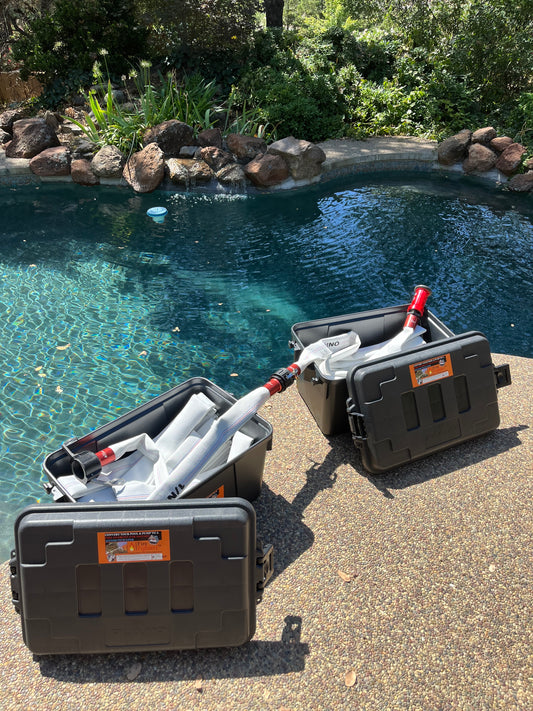
But if you have a pool, why not have access to all that water at a much more significant rate of pressure and range?
Your Pool: A Hidden Fire Defense Resource.
Most homeowners overlook one of the most powerful tools they already have: their swimming pool.
A typical residential pool contains 10,000 to 25,000+ gallons of water; equivalent to the volume carried by 10 to 25 fire trucks. Yet in most cases, this massive water reserve remains inaccessible during emergencies.
When fire conditions escalate, municipal water systems can become strained. During major wildfire events:
- Hydrants may lose pressure or run dry.
- Fire crews are prioritized for life safety and perimeter control.
- Response times can increase significantly.
In these moments, having immediate, independent access to water is not just beneficial; it is vital.
Why Immediate Action Changes Outcomes.
Wildfires move fast, but ember ignition happens even faster. The window between ember exposure and active fire can be minutes, or even seconds.
Having the ability to act immediately allows homeowners to:
- Pre-wet roofing, siding, and structural elements.
- Saturate decks, fences, and nearby combustible materials.
- Protect vents, eaves, and vulnerable entry points.
- Drench landscaping and defensible space around the home.
This proactive approach creates a moisture barrier that significantly lowers the probability of ignition. It does not eliminate risk entirely, but it dramatically shifts the odds in your favor during the most critical moments.
And in wildfire scenarios, time is everything.
From Passive Risk to Active Defense.
Fire preparedness is no longer just about evacuation plans; it is about reducing vulnerability before help arrives.
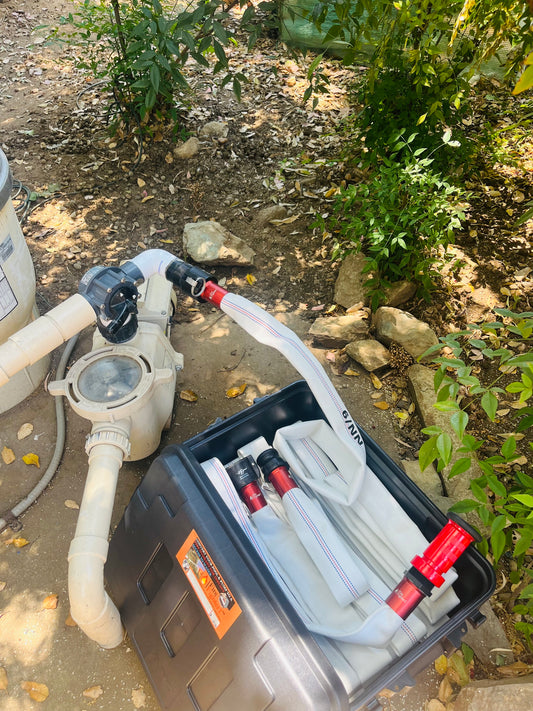
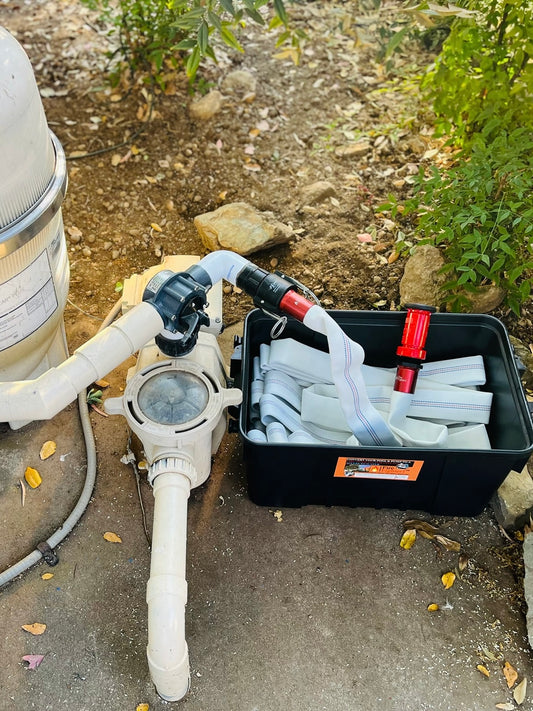
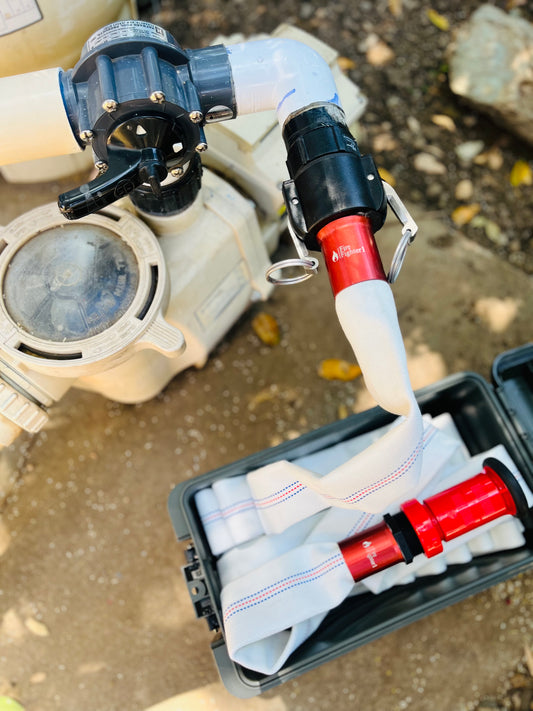
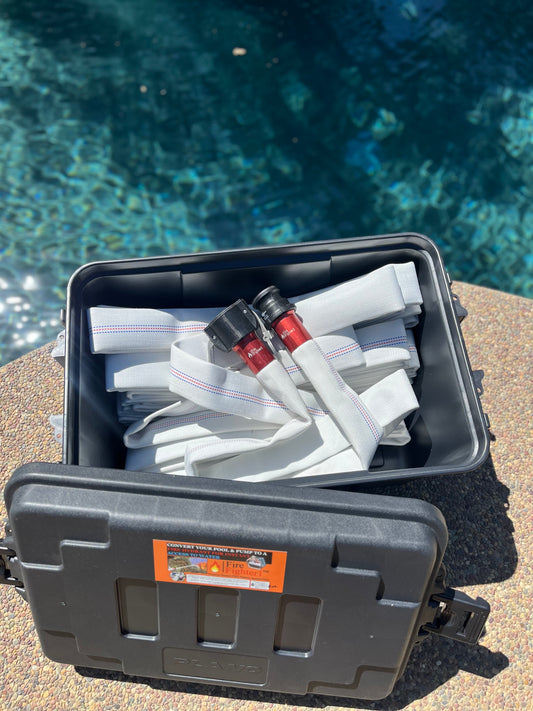
A system like FireFighter1 transforms a passive resource—your pool—into an active defense tool. By connecting directly to your pool’s existing infrastructure, it enables immediate access to high-volume water flow without the need for complex, expensive equipment.
This allows homeowners to:
- Use their existing water supply efficiently.
- Deploy quickly with minimal setup.
- Drench and wet the entire property and surrounding.
- Maintain consistent performance through a system they already manage.
- Spray more than 100GPM of valuable water more than 40 feet high.
Compared to costly fixed sprinkler systems or bulky gas-powered alternatives, this approach is:
- More accessible.
- Easier to maintain.
- Ready to instantly deploy when needed, without extensive preparation.
A Shift in Mindset: Community-Based Fire Defense.
Wildfires are not just individual events; they are community-wide challenges. Homes are often built close together, especially in areas near natural landscapes. When one structure ignites, the risk spreads quickly to neighboring properties.
This is why preparedness must extend beyond a single home.
With the right tools, homeowners can:
- Protect adjacent properties.
- Support neighbors during emergencies.
- Reduce overall fire spread within a community.
- Save families and millions of dollars in property damage.
Fire defense becomes stronger when it is shared.
Weekly Fact-Drops:
Did you know that in the U.S., fire departments respond to a fire roughly every 21–23 seconds. In 2024, fires caused around 3,920 civilian deaths, 11,780 injuries and billions of dollars in property damage. Functional and reliable fire safety systems at home can reduce the risk of home fire deaths and property loss by about 60%.

The Minutes That Matter Most.
Wildfire risk is no longer a distant possibility; it is an evolving reality across the United States. Over the past three decades, fire behavior has changed, seasons have expanded, population has grown, the number of fire professionals compared to the population has reduced and the stakes have grown higher.
Yet one fact remains constant:
The earliest moments of a fire event are the most critical.
Embers will continue to travel miles ahead of flames. Dry conditions will continue to increase ignition risk. Emergency services will continue to do everything they can; often under immense pressure.
The question is no longer whether fires will occur.
The question is whether your home is prepared when they do.
FireFighter1 was built on a simple but powerful idea: you already have the water; now you have the ability to use it.
Because when it comes to fire, the difference between loss and survival often comes down to one thing:
What YOU, as a homeowner, can do before help arrives.
.